Oregon Just Took Its First Big Step Toward a Tech-Forward Future for People with Disabilities
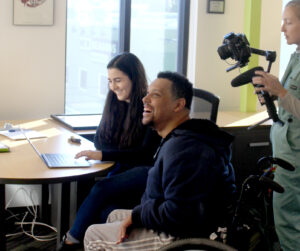
What does independence look like? For one person, it means being home alone for the first time and controlling your own lights and TV. For another, it means landing a real job, having a boyfriend, and living, as they put it, “a life that makes me feel like me.”
Technology makes these things possible; and on April 28, Oregon got serious about making them possible for a lot more people.
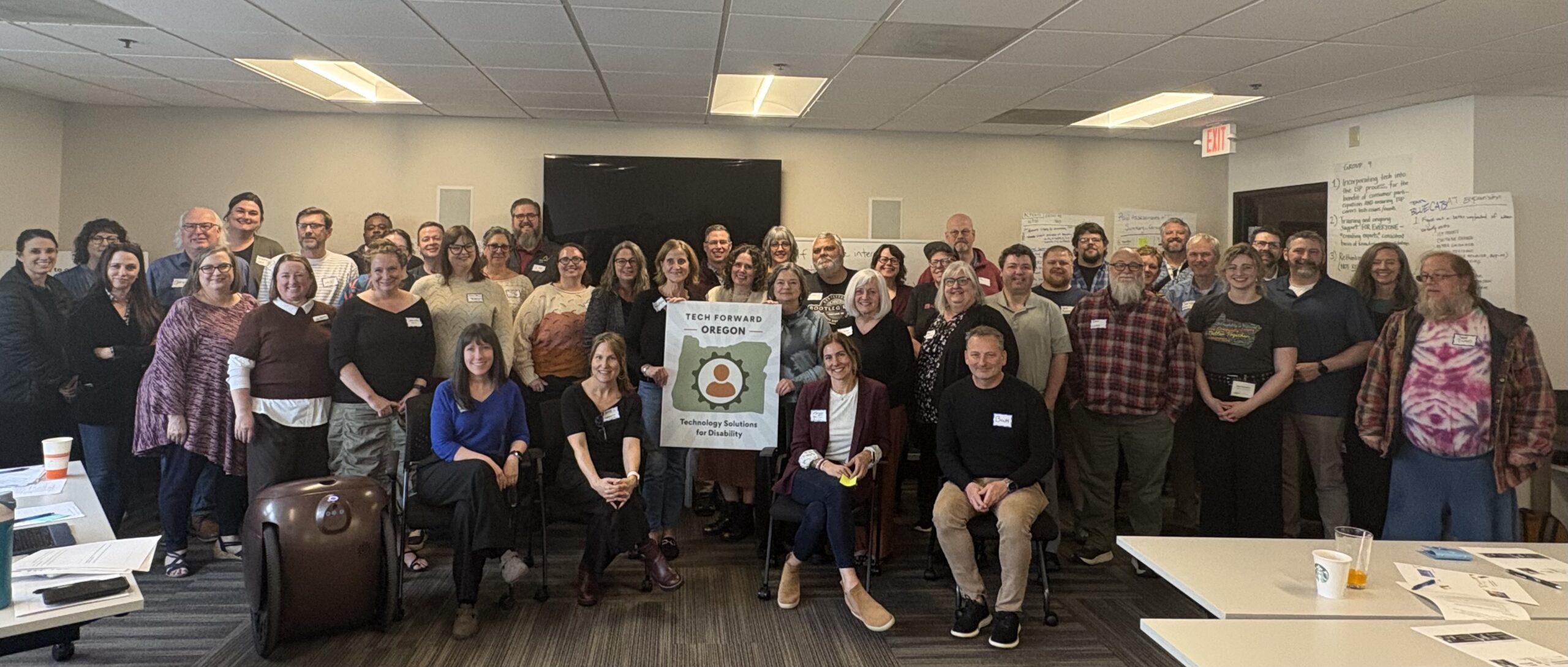
Community Vision held Oregon’s first-ever Disability Technology Policy Summit, bringing together case managers, providers, policymakers, and advocates to explore how our state can harness technology to expand independence for people with intellectual and developmental disabilities (I/DD). The Summit was sponsored by the Oregon Council on Developmental Disabilities (OCDD) and the Kuni Foundation. ow they spend their day, to choose who their caregivers are, and other basic aspects of their lives are at risk.
The theme: “Architects of Innovation”
The goal: to stop talking about what’s possible and start building it.
A Roadmap from a State That’s Already Doing It
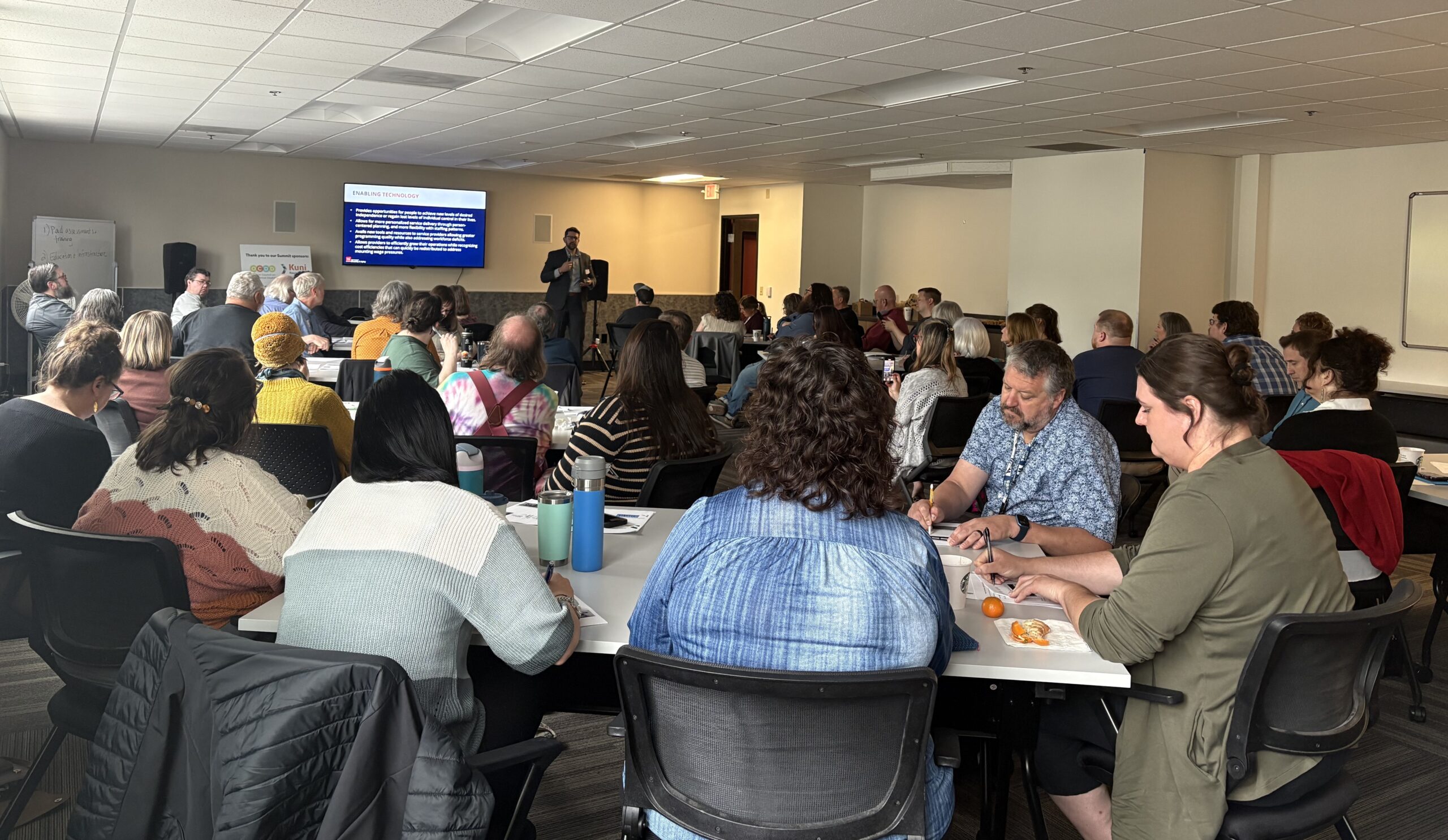
The morning’s standout presentation came from Jeremy Norden-Paul, Director of the Division of Program Innovation at Tennessee’s Department of Disability and Aging. He shared how Tennessee has spent the last decade quietly becoming one of the most innovative states in the country for disability services, and has the data to prove it.
Tennessee’s secret? Investing in what they call Enabling Technology: tools and approaches that help people do more independently, from smart home devices and remote check-in services, to AI-powered supports and employment tools. The results are striking:
This is what Community Vision is all about. By helping individuals thrive, the community itself grows stronger.
- The Flex Model, which lets people choose how they blend tech support with traditional staff support, saves the state $24,000 per person per year, and then shares $440,000 of those savings back with providers.
- People using enabling technology are 1.9 times more likely to be employed.
- The MAPs program (Medicaid Alternative Pathways to Independence), which launched in FY23, has already seen 700+ participants achieve 1,400 independence milestones, with a projected $2 return for every $1 invested.
But the numbers only tell part of the story. Tennessee’s Innovation Centers offer 3D-printed custom assistive devices, virtual reality labs, and driving simulators.
“Saddle up, y’all,” said Tennessee Commissioner Turner. “We ride at dawn.”
Oregon is poised to saddle up.
Oregon Gets to Work
In the afternoon, Tech Summit attendees rolled up their sleeves and built an action plan. This was not a wish list; it was a working roadmap with timelines, owners, and real accountability.
In 2026, the work will focus on four key areas:
- Messaging: Developing guiding principles and a shared vision to make Oregon a Tech Forward state.
- Training & Resources: Creating a comprehensive directory of DD tech expertise and available resources, plus a repository of technology examples for providers and families.
- Emerging Technology Pilots: Identifying willing providers to launch pilots to test different types of technology, seek regulatory variances from the state, and begin collecting real-world data.
- Data Tracking: Identifying what data Oregon needs to collect, informed by what other states are measuring, to make the case to legislators.
The longer horizon stretches to 2030, with goals including legislation to fund new tech services in Medicaid waivers, regional tech hubs, and credentialed technology specialists in every region of the state.
Why This Matters Now
Oregon, like every state, is facing a direct care workforce crisis. There simply aren’t enough support workers to meet demand, and that gap only continues to grow. Technology isn’t a replacement for human connection, but it is a bridge: one that lets people do more on their own terms, stretches limited workforce resources further, and makes the whole system more sustainable.
More importantly, it’s what people want. When given real choices, and real tools, people with disabilities consistently show that they are capable of far more independence than traditional service models assume.
As one person in Tennessee put it after gaining smart home technology for the first time: “Before technology, I was never alone in my house. I could not open the door, turn on my lights, control my TV, or have privacy in the bathroom or bedroom. Now technology allows all these things.“
Oregon has the opportunity to achieve the same success as Tennessee, but now we have to build it.
Stay Tuned
The work that started at the Tech Summit is just beginning. Community Vision will be sharing updates as the Tech Workgroup moves forward, pilots get underway, and Oregon charts its course as a technology-forward state. In the meantime, make sure you a signed up for our newsletter and check out our new series, Tech Tuesdays.